

“Unconscious masking has been an extremely large part of my life,” says autistic artist Anna Margaretha Pettersson
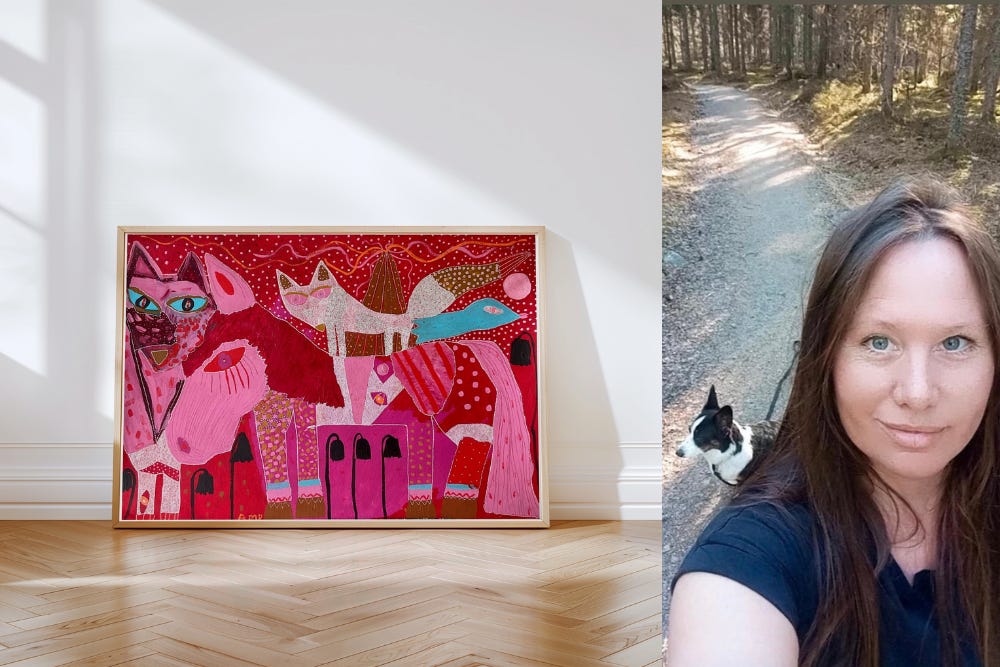
Anna Margaretha Pettersson, 46, lives in Sweden and spends her days writing, painting and walking in the woods with her dog, Ebba. Here, we talk art, creativity, autism and dreams.

This is an interview from We Hyperfocus Magazine. You can read 30+ interviews and articles here. We feature only neurodivergent creatives. If you’d like to support this work, you can do that with a small monthly/yearly subscription. Your support really does make a difference. It helps us to keep growing this platform and getting word out about the power and potential of a mind that works differently…
Now, the interview…
“Unconscious masking has been an extremely large part of my life,” says autistic artist Anna Margaretha Pettersson
Did you have a creative childhood?
I was probably quite creative as a child, even if it wasn’t in the stereotypical way with paints, pencils, and crayons. I often had creative ideas that others had a hard time understanding the logic or meaning behind. For example, I wanted to have newspaper pages covering my walls instead of new wallpaper because I loved the written word so much. And I recorded different radio programs and TV shows with a camera, so in a way I suppose I was quite creative as a child. But I also think that most children are creative – that it’s something children tend to possess naturally.
Do you remember the first painting you did that you felt proud of?
In general, I find it a bit difficult to feel proud; I’m not entirely sure how it actually feels. But I remember one of my first larger works that I sold to a collector in the United States, and how excited I was that someone wanted something I had created. It gave me a feeling that it might actually be possible to pursue what intuitively feels completely right for me and do it professionally.
How did you find school?
I liked school, even though it involved certain challenges socially and in terms of energy, and I often felt that the environment was messy and chaotic. But I generally found it quite easy to learn things in school, and I enjoyed studying. I have also continued studying at university level in different subjects.
What has always been difficult for me is collaborating in groups and the social aspects. Even though I have had friends, it has been challenging as a girl to be quite driven and to prefer doing things on my own. In addition, I was a very inconsistent student because my energy would run out all the time. My teachers always said that I either performed at the very top level or not at all.
Did you go onto to study art?
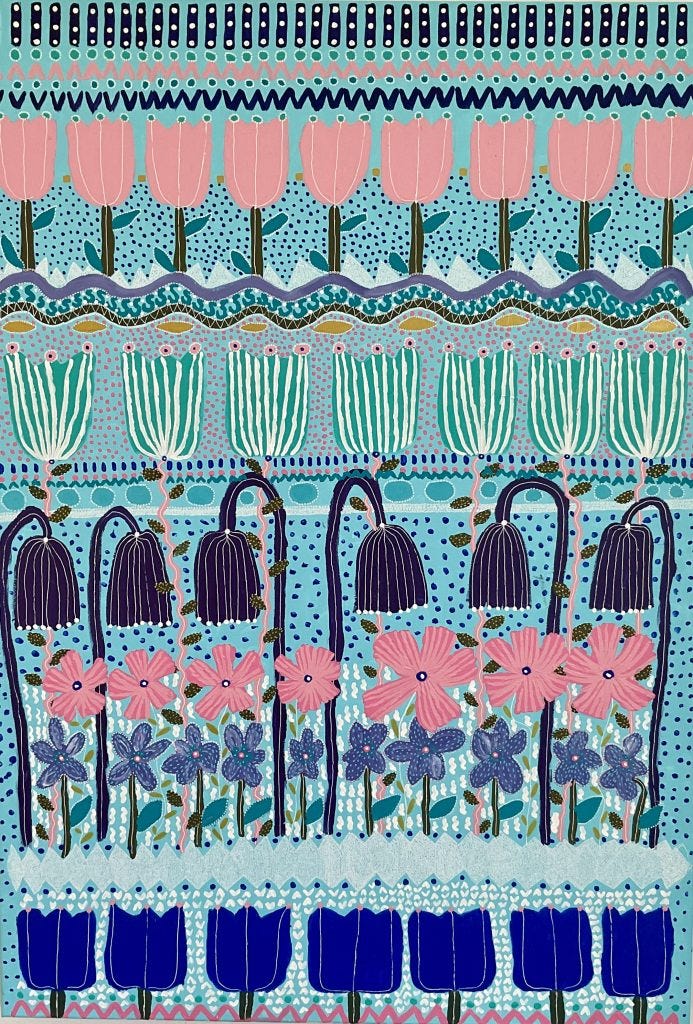
No, I haven’t attended art school; I’m self-taught, a so-called outsider artist. Painting as a creative form of expression is actually relatively new to me, as my creativity previously was mostly focused on writing and text. But around the time I received my autism diagnosis a couple of years ago, I began drawing and painting as a way to express stress, and it became a way for me to process impressions and anxiety. Along the way, I realized how much I enjoy expressing myself visually.
Did you always know that you wanted to be a professional artist?
As a child, I knew that I wanted to write and become an author, but I never had any thoughts about becoming an artist. It’s something that has developed over time, as I received my autism diagnosis and began learning new ways to manage my life – where painting and drawing have become major pillars in how I manage stress and sensory input.
When did you realise that you were neurodivergent?
I have always had a feeling of being different, but you only really have yourself to compare with, so I probably assumed that everyone feels that way. I never actually considered the possibility that I might be autistic; it was my therapist at the time who noticed the signs in me. By then, I had been on sick leave for several years due to burnout without understanding why.
When I was eventually assessed and later received my autism diagnosis, many pieces suddenly fell into place. Unconscious masking has been an extremely large part of my life, and I also had very little knowledge about autism. I only knew what mainstream media portrayed through rather stereotypical images.
How did you feel about it?
At first, I was quite shocked. It felt as if I had lived my whole life on stage, and suddenly I was supposed to start being who I really was. It was an extremely difficult and long process with many conflicting emotions, both relief and shame, which I later wrote about in a book, My Life on Stage – Autism Through My Eyes, as a way to process and work through the experience.
How does being autistic impact your creative process?
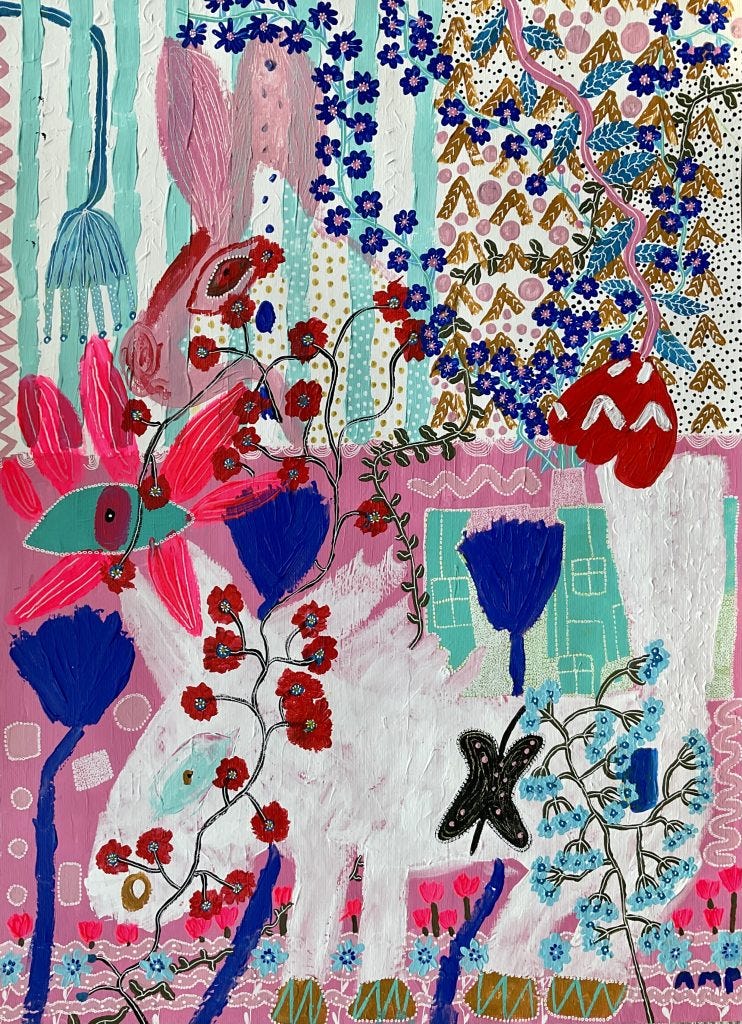
Autism profoundly influences my art, both in how I create and what I create. My artwork has become a crucial tool for processing the constant flow of sensory input, stress, and complex emotions that I experience. Through drawing and painting, I find a way to make sense of overwhelming impressions and to express feelings that are difficult to put into words.
At the same time, my autistic mind, with its heightened awareness of details and patterns, is strongly reflected in my work. I notice intricacies, repetitions, and structures that might go unnoticed by others, and these elements naturally find their way into my compositions. This combination of using art as an emotional outlet and a lens for observing the world shapes both the process and the final outcome of my creative expression, giving my work a deeply personal and distinctive perspective.
Does it bring any challenges?
While I deeply enjoy the creative process itself, I often struggle with the social aspects that come with being an artist. Reaching out, networking and making professional connections can be exhausting and challenging for me. My focus and energy are primarily devoted to creating, which means that while my art thrives, the social and logistical sides of the art world can feel overwhelming and difficult to navigate.
Do you have a studio where you paint and if so, what’s it like?
I have my studio in my own home because it takes a lot of energy for me to go out somewhere else. It’s a small, cozy room where I feel comfortable and focused. My dog, Ebba, is always with me when I paint, keeping me company and adding a sense of calm and warmth to the space.
What does an average day look like, for you?
My days are fairly structured and follow a routine shaped by Ebba, my dog, and her needs. Around that framework, I build my own schedule, and I usually paint in the mornings, as that is when I have the most energy. We also spend a lot of time in the forest, where I find both calm and inspiration for my work.
Do you have tools and rituals to help you to feel good?
Painting and drawing are my primary tools for well-being, helping me process stress, emotions, and sensory input. In addition, I practice yin yoga and spend a lot of time in the forest with my dog. These are my main ways of taking care of myself and maintaining balance in my life.
What dreams do you have, for your career?
At heart, I am very grateful and content to be an artist. I am happy with the small things I have achieved, while still allowing myself to dream and aspire for more. I already live my dream being able to working professionally with my art and make a living out of that, but my greatest dream as an artist is to be able to continue working professionally and to make a living from my art. It would be incredible to have a large solo exhibition at a well-known gallery somewhere in the world, where many people could experience and connect with my work.
Is there anything you’d like to say to the next generation of autistic artists?
What I would like to say to the next generation of autistic artists is that their perspectives, voices, and ways of seeing the world are needed now more than ever. The way they experience and interpret things is unique and incredibly valuable.
Follow Anna on Instagram: @annamargarethapettersson / Invest in her art: annampettersson.etsy.com