

Too much, not talented enough
Artist and interpersonal psychotherapist Alice Bramhill on what happens when you ignore the negative self talk and 'create anyway', as a neurodivergent artist.

As a child I painted on my white melamine bedroom wardrobe doors, a huge canvas waiting to be filled. This wasn’t an act of defiance. It just made sense to me to adorn them with grasses, wildflowers, bees and butterflies, to bring my interpretation of nature in as close to me as I could.
My brother was well known for being the artist in our family. He was genuinely technically gifted. I felt my artistic endeavours got compared to his a lot and I never came out well from that comparison. School more or less agreed with the general consensus and that seemed to be that.
Comparison is one of the most effective ways to quietly close a creative person down. Especially a child who already suspects she doesn’t quite fit.
So I found other surfaces. Wallpaper. Fabric. Anything I could tie-dye. I hand-embroidered a lot, which back then was still considered a suitable skill for a girl to have, even as the actual demand for embroidered tray cloths was already dying out. I wrote too. Writing was the one creative thing people seemed happy to point me towards. The rest I did on my own, mostly.
Nobody gave me permission to create. So I just did it anyway, in the gaps.
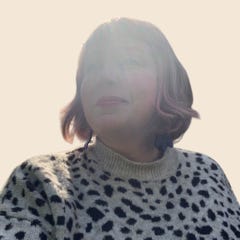
I’m almost 52 now. I was diagnosed with ADHD at 47 and autism at 50, late, as so many of us are. And when I look back at that child covering every available surface, I feel a lot of tenderness for her. She wasn’t being difficult. That was just how her brain worked.
After I qualified as a mental health nurse at 21, my first job was in a day hospital in Soho. It was one of the best things that could have happened to me. Art therapy, music therapy, drama therapy, a ceramics studio. I was surrounded by people who took making seriously, and everyone, outpatients and staff were encouraged to join in. It sounds small, but it wasn’t. It was the first time I could create, and support others creativity without any perceived judgement.
I started taking evening classes after that. Silversmithing, more pottery, sewing, life drawing. A decade later I did an art foundation. Twelve years after that, a degree in ceramics, print and textiles. I was 47. The same year I got my ADHD diagnosis, which in hindsight makes complete sense.
I sold ceramics at art fairs, exhibited in galleries and for a while I was completely set on that being the direction. The pressure to make my entire living from making was affecting my creative output, and I was missing my client work.
I’m a psychotherapist and therapeutic coach, and stepping back from that work had left a gap I hadn’t anticipated. Trying to run a ceramics business alongside seeing clients and home educating my two neurodivergent children wasn’t sustainable, and I could feel that burnout was coming if I didn’t make a change. I’ve got better at recognising that feeling.
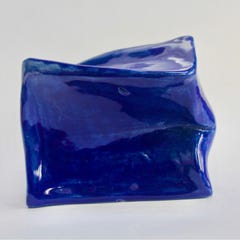
So the ceramics came back to me, for now. Not for selling. For me, for family, for friends. I have a few boxes of pieces I made a couple of years ago that will find good homes eventually. But once the making stopped needing to earn its place, something in me relaxed about it.
My two main creative loves right now are pottery and Procreate, and they scratch completely different itches.
Procreate I pick up when I want something immediate. A quick doodle that turns into a pattern, the satisfaction of making something in an afternoon. I use it for the artwork on my Instagram carousels and my Substack thumbnails, but honestly it started as play and it still feels that way. My inspiration is almost always from the natural world. Insects, plants, close-up texture, the kind of detail that doesn’t announce itself.
Four years ago I built a wildlife pond in my garden and it’s been genuinely one of the better decisions I’ve made. I spend a lot of time out there just watching. Birds drinking and bathing. The patterns I notice end up in the work.
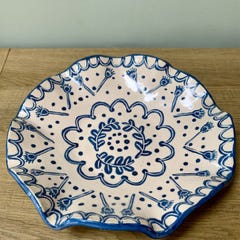
Pottery is everything Procreate isn’t. Throw, dry, bisque fire, glaze, glaze fire. You spend weeks with something before you find out if it worked. I don’t always have the patience for it, genuinely. But I always love what comes back out of the kiln.
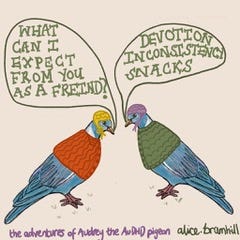
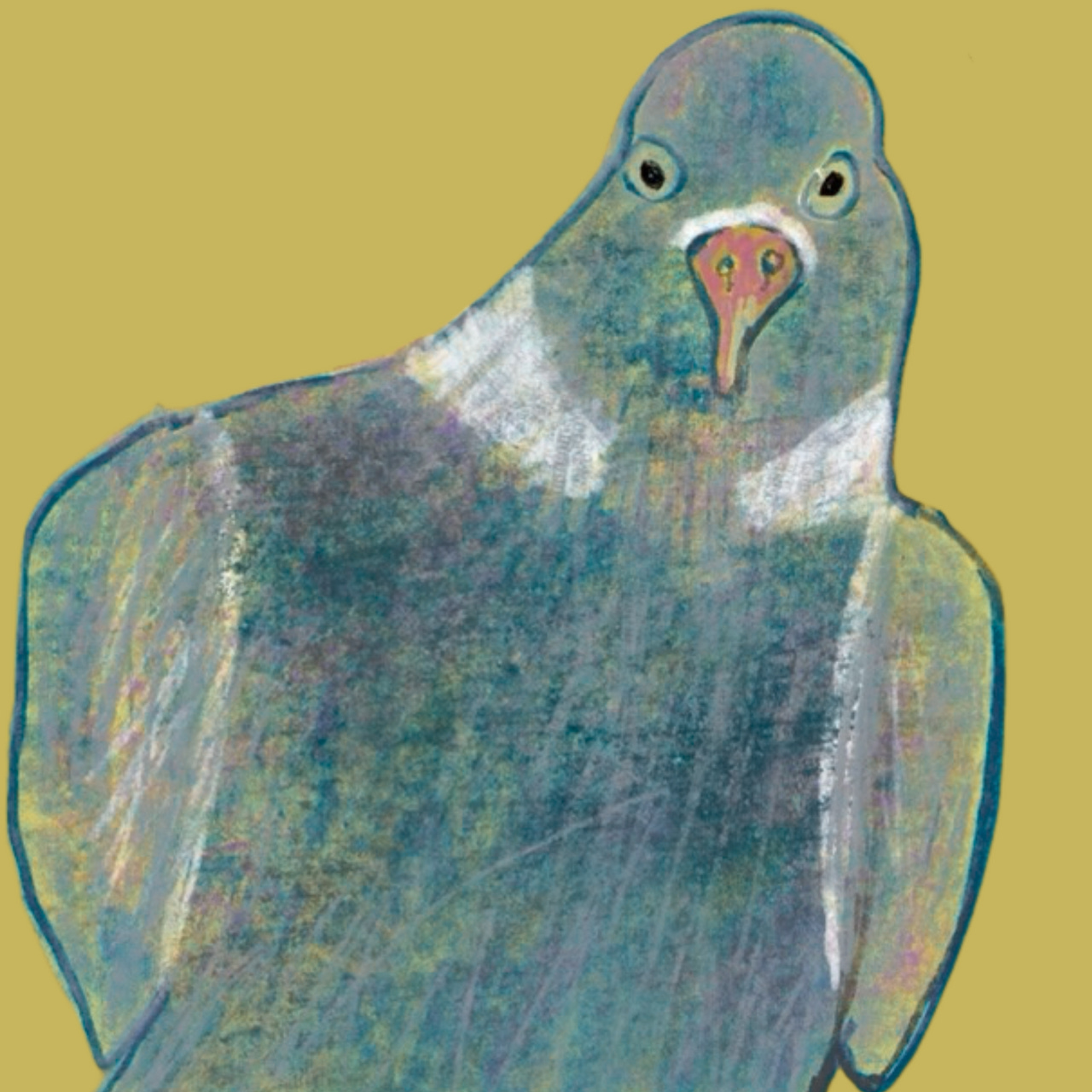
I also knit. And before that there was silversmithing. And sewing. And the pigeon drawings. And I’ve learned to stop treating that as a problem.
For a long time I thought I was supposed to pick one thing and stick to it. That moving on from something meant I’d failed at it, or given up, or couldn’t commit. But that’s not what’s happening. What’s happening is that I hyperfocused, I got what I needed from it, and then it stopped being interesting. That’s not failure. That’s just how some of us work.
The knitting will probably give way to something else at some point. The pottery keeps coming back because it suits something deeper in me. But I’ve stopped giving myself a hard time about following the thread of whatever is actually holding my attention right now. Permission to be in the middle of three things at once, to put something down without it meaning anything about your character, to pick something back up years later. That’s taken me a long time to give myself. It shouldn’t have to take that long.
I think everyone is creative. I just think a lot of people had it taken from them at some point. A comparison. A throwaway comment. A system that decided early which children had it and which ones didn’t.
I was that child. And for decades I thought the verdict was final.
Understanding my neurodivergence changed that. Not because it gave me an excuse, but because it gave me an explanation. The child painting on wardrobe doors wasn’t lacking discipline or focus. She was doing exactly what her brain needed to do.
That’s what I know now. And that knowing is the permission. Not permission from anyone else. Permission from myself, finally, to be exactly the kind of creative person I actually am. Not the one I was compared against. Not the one the system had a category for.
This one.
Pre-order: I Need My Space (But I like you too!) by Alice Bramhill
Instagram: @alice.bramhill
Website: www.alicebramhill.co.uk

If you’d like to support We Hyperfocus - the platform by and for neurodivergent creatives, including a magazine, an Instagram account, a monthly directory of courses for neurodivergent creatives and this Substack - we’d be ever so grateful.
You can support We Hyperfocus…
for £3.50/month or £35/year here: wehyperfocus.substack.com/subscribe
for £1.75/month or £17.50/year here: wehyperfocus.substack.com/alittleless
for 88p/month or £8.75/year here: wehyperfocus.substack.com/everypennycounts
Thank you for reading, and supporting.
Annie x
 | A guest post by
|
Thank you for this - so much of it strikes a cord. Giving yourself permission to create in your own way, to hyperfocus, then change focus when that feels right, to not see it as giving up or failing... I'm in the middle of all that right now. Oh, and I love that blue and white plate.
Very cool reading about all your creative outlets, Alice. A fabulous mix of the expressive arts and intricate multi-process product-driven makings. And I love hearing about your wildlife garden. I’ve seen glimpses of your garden and it’s beautiful. I adored our pond as a child. I would love to create one.