

“Suddenly things made sense. I wasn’t stupid, or lazy, or useless. My brain just worked in a different way,” says puppeteer Basil Waite, AKA FopDoodles, who is ADHD
Basil Waite talks about being homeschooled until the age of 10, feeling misunderstood at school, hating university, being ADHD and how he came to be a puppeteer, with help from others in the industry

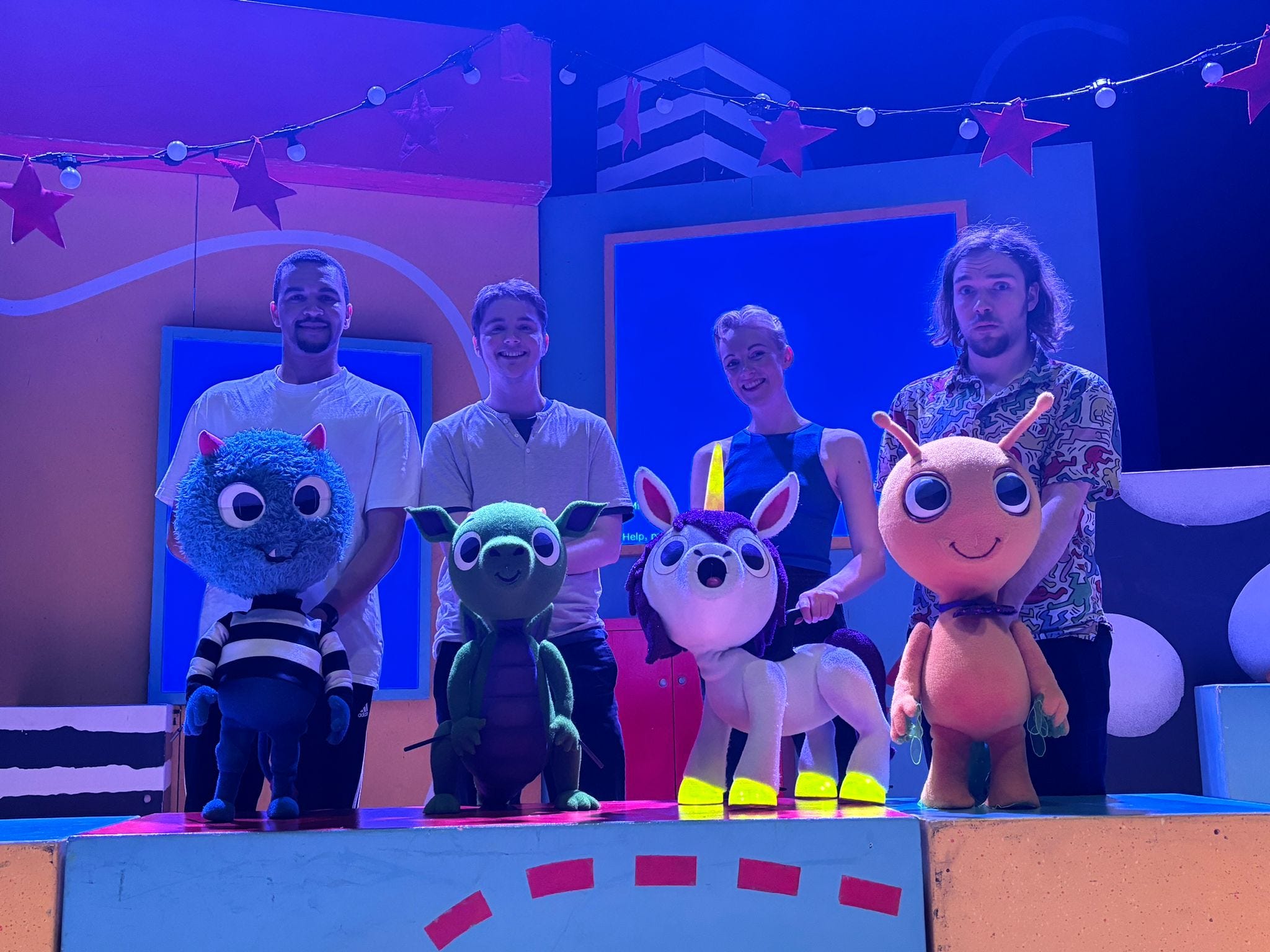
Basil Waite, AKA FopDoodles, is 36 and lives in South Wales.
Tell us about your creative career…
I hated university, but while I was there I managed to get several work placements at CBBC in London, off my own back. I worked on Blue Peter and a few other shows, and that’s where I fell in love with children’s entertainment, especially the live puppetry side of it.
At the time though, I wasn’t based in London and I came from a working-class background, so that world didn’t feel open to me. I quietly filed it away as a pipe dream.
After graduating I became an illustrator, working with indie publishers and private clients. Over time I started selling work at comic cons, festivals and events, and tried everything from wedding illustration to running live workshops. Along the way I learnt a lot about character design, colour theory, storytelling and how to connect with people.
Combined with my lifelong love of puppetry, moving into puppet building and performance eventually felt like a natural step. That said, I had no formal background in performance, and I was actually banned from textiles at school after breaking the sewing machine within five seconds of the lesson. So it was mostly passion, persistence and a lot of terrible early creations that got me here.
I was also incredibly lucky that professional puppet builders and puppeteers were generous with advice when I was starting out. That kindness meant a lot to me, as I had absolutely no idea what I was doing.
Now, about three years later, I run FopDoodles, where I build puppets and perform, and founded The OverTheres, a non-profit literacy programme designed to support neurodiverse children and help all kids fall in love with reading, books and hands-on creativity. I started it with two brilliant friends who also grew up navigating neurodivergence and a lack of support in school, so it’s something we care deeply about
What does a work day usually look like?
It changes every day, which is both exciting and slightly terrifying. I usually start work around 10.30am. A combination of chronic illness and ADHD means early starts and consistent sleep can be tricky, so I’ve learned to work with the rhythm that suits me best.
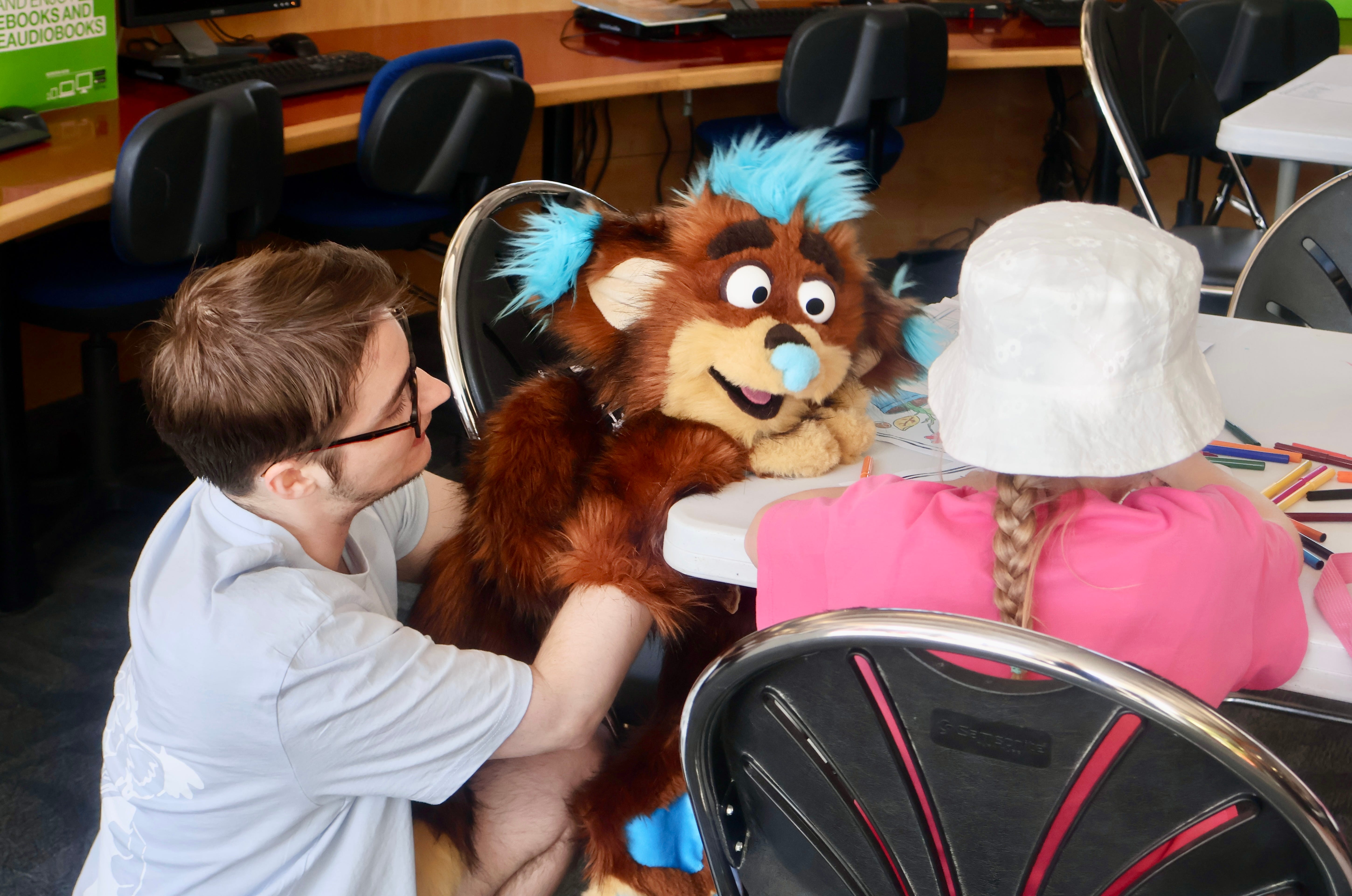
My day usually begins with a bit of admin - scriptwriting, research, emails, or catching up with clients. After that, I’ll spend most of the day working on puppet builds. These are often commissions, and each one comes with its own set of challenges and little engineering puzzles to solve. I also try to remember to photograph the stages of the build, both for the client to review and for social media.
I have a bit of a love–hate relationship with social media. It’s useful, but it can also be time-consuming and overwhelming, so if I can capture something “content-worthy” during the natural build process, it saves me some time and brainpower later.
I’m usually working on two or more puppets at once. That way, if one project pauses while I’m waiting on materials or feedback, I can move straight onto the next. If there’s ever a brief lull in commissions, I work on pre-made puppets that I sell through my website, and hopefully one day I’ll have enough stock to take them to festivals or comic cons.
Throughout the day I’m also ordering materials, researching solutions to problems I’ve run into, and connecting with other creatives.
Every so often, the day looks completely different and involves live appearances, workshops, or shows through my non-profit, The OverTheres. Those are some of my favourite days, getting to encourage play, imagination, and storytelling with families and young people, and using puppetry for good with some of my favourite creatives.
Where do you find new ideas and inspiration?
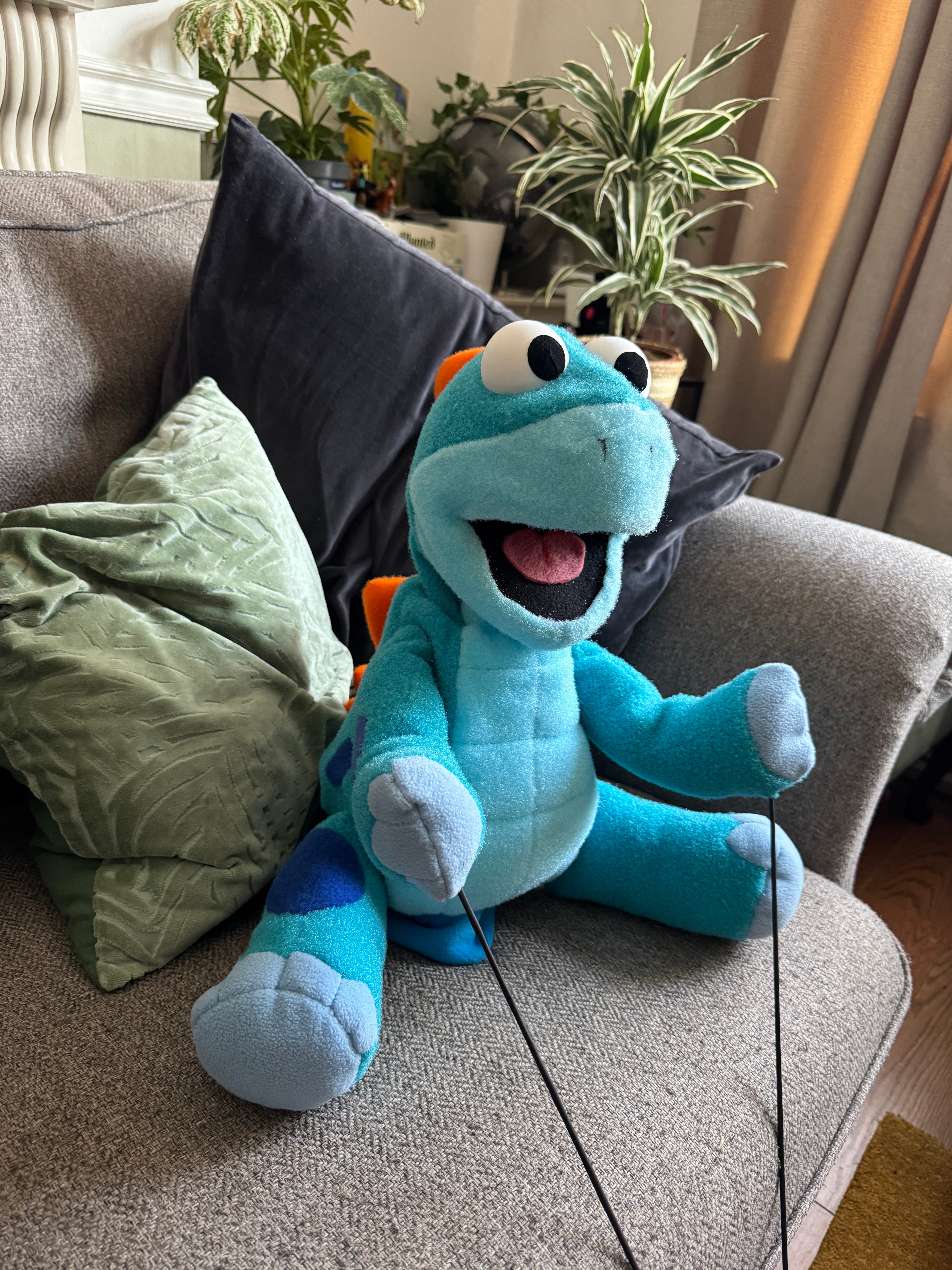
With puppetry, it’s often that I’ve got some leftover fabric that I want to use, I’ve seen a character design I’d love to interpret in my own way or I’ve just woken up with the burning desire to make a blue dinosaur.
In terms of writing work for The OverTheres, I make things I wanted to see as a youngster. The project is all about being yourself, inclusion, accessibility, creativity and stories so it’s endlessly inspiring. If I’m stuck, I’ll pop to the library, chat to parents or watch some kids TV to remind me of my audience and our end goal.
What do you do if you become creatively blocked?
Usually, I get frustrated. Creative blocks have a nasty habit of making me feel like I’m a terrible puppeteer and a complete imposter in the industry who should never work again.
When that happens, I try to step away from the work for a bit. Going for a walk or having a shower often helps reset my brain, and sometimes I’ll watch something inspiring or immerse myself in another creative medium for a while. Just taking a few hours off is often all I need.
Other times, the best solution is simply to wait it out and do the boring jobs I’ve been avoiding - admin, tidying the workshop, or even the washing up. Strangely enough, those small tasks are often what get the creative engine going again. By the time I come back to work, the spark has usually returned.
When did you discover that you’re neurodivergent?
Only a few years ago, when I hit 30. I’d always felt different, needed support I didn’t get and as a result had a really hard time throughout my childhood, education and the workplace.
I think I read a self-help book that I can’t remember the name of and it listed some things about ADHD and it was like a lightbulb moment.
Then I looked into it, researched, spoke to neurodiverse people and when I told my friends I suspected I had ADHD, they all assumed I was already diagnosed. That reaction told me quite a lot.
I’d also like to see a little less of the “TikTok-ification” of neurodivergence. Seeing people like you represented online can be incredibly important, and visibility matters but ADHD, for example, isn’t just a quirky or funny personality trait for me
How did you feel about it, at first?
It was like a weight had lifted. Suddenly things made sense. I wasn’t stupid, or lazy, or useless. My brain just worked in a different way and I had no idea how to manage that previously. I started reading up on it and realised there were coping methods and workarounds.
What was school like for you?
I was homeschooled until I was 10 by parents who didn’t really know how to manage a kid with different needs. My only memories of those homeschool days are crying, throwing things and feeling intensely frustrated.
Fast forward to regular school, which was tough. I had lots of friends and was bright when something captured my interest, but I really struggled with maths, science, and sitting still through lessons I found boring. I remember being yelled at by a science teacher because I couldn’t recall any of the points he’d made, a moment that really stuck with me. That - and constantly being late and forgetting homework - did not make me a popular student.
Even though I loved art, drama and sport, the feedback from teachers was often the same: I was distracted, restless, not doing things the “right” way. I was even sent out of an art class over and over because I’d get bored during a short lecture, which felt especially frustrating in a subject I loved.
Looking back, it was clear that school at the time wasn’t very tolerant of neurodivergence. I didn’t fit the mould of the “normal” student, and that made those years pretty difficult. What does making a kid sit alone in a corridor for an hour achieve, apart from making them feel stupid?
What got you through?
My love of sports, and creativity.
I got to run it all off on a pitch, tackle people who’d wound me up in lessons (sorry coach) and draw pictures in maths to make it more tolerable. It was a real challenge though and I do not miss any academic settings.
In what ways does your neurodivergence help you, creatively?
I think it’s made me more compassionate in the way I work. Whether I’m building a puppet, collaborating with a client, or writing a show, I’m always thinking about how to make the process comfortable and inclusive, because I know how it feels when spaces aren’t designed with you in mind.
I’m also very aware of my own tendencies, like overthinking, so I try to communicate openly. If I need time to reflect before replying, I’ll say so, or keep people updated so they know where things stand.
Creatively, it also allows me to interpret ideas in my own way. I often see connections or approaches that might not be the most obvious ones, which can lead to unexpected character choices, design ideas, or storytelling moments.
Does it bring any challenges?
I struggle with organisation as someone with ADHD, so it can be really stressful to keep on top of everything that comes with being both a freelancer and running a CIC - admin, marketing, meetings, writing, performing, building, and social media.
It’s a lot for anyone, but it’s an extra challenge for me. Also, ensuring I’m being authentic and honest with my followers, workers and fellow performers so they know what to expect when working with me, is nerve-racking. So far everyone I’ve worked with has been understanding but I worry one day they won’t be.
Greater awareness that neurodivergence is complex, challenging and deeply human would go a long way.
Do you prefer to work alone, or with others?
It depends. When I’m building puppets, I prefer to be alone. I hate the idea of being judged or observed. I think it’s rejection sensitivity, the idea that someone watching me mess up means they think I’m useless or rubbish at my job. I’m trying to work on it, but it’s tough. I find that if I put music on and just work away for hours, it seems like no time at all.
For writing and performance stuff, I need a team. I’m lucky that I’ve got great, creative people around me who inspire me and make me laugh all the time.
What are your creative dreams for the future?
I’d love to work with the Henson Company in some capacity one day. I know it’s a big dream, especially being based in Wales, but it’s the one place that really captured my imagination growing up. If someone asked me to perform Kermit’s right hand just so I could be in the same room as those geniuses, I’d happily say yes.
Fraggle Rock was one of my biggest inspirations as a child, so the idea of performing on that set, or even contributing to that world in some way, would mean the world to me.
More than anything, though, my dream is simply to keep doing this. I’d love to spend my life building puppets, performing, collaborating with brilliant people, and spreading a bit of joy wherever I can.
With my CIC, The OverTheres, I’d love to see it grow to the point where we’re fully booked during school holidays - visiting libraries, theatres and community spaces across the country, meeting families, and sharing the wonder of storytelling and books with as many young people as possible
And your dreams for neurodivergence/the neurodivergent community?
I’d love to see more compassion and understanding. In the arts there’s often a bit more openness around different ways of thinking and working, but outside of those spaces, the support can be much thinner. It can feel like you have to constantly explain yourself, challenge stereotypes, and advocate for your needs just to be taken seriously.
More education in workplaces would make a huge difference. A better understanding of neurodivergence helps create environments where people can actually do their best work, rather than spending their energy masking or defending themselves.
I’d also like to see a little less of the “TikTok-ification” of neurodivergence. Seeing people like you represented online can be incredibly important, and visibility matters but ADHD, for example, isn’t just a quirky or funny personality trait for me. It affects my day-to-day life. It means missing deadlines, struggling with tasks that others take for granted, and often needing accommodations to navigate work and life successfully.
Greater awareness that neurodivergence is complex, challenging and deeply human would go a long way.
www.instagram.com/fopdoodles / www.instagram.com/theovertheres/ www.fopdoodles.com / www.theovertheres.co.uk
Did you enjoy this piece? If so, please remember to give the heart a little tap.
Support us
Our mission, here at We Hyperfocus, is to change the narrative around neurodivergence and creativity.
It feels like the most powerful way to do that is by profiling the neurodivergent creatives themselves.
Highlighting both the challenges and strengths of a mind that works differently.
So, that’s what We Hyperfocus Magazine is all about.
And we really need your support.
You can support We Hyperfocus…
for £3.50/month or £35/year here: wehyperfocus.substack.com/subscribe
for £1.75/month or £17.50/year here: wehyperfocus.substack.com/alittleless
for 88p/month or £8.75/year here: wehyperfocus.substack.com/everypennycounts
Thank you for reading, and supporting.
Annie x