

"I wasn’t drained, ashamed or worthless: I was an artist and being dyslexic didn’t matter."
Kerry Nicole Davies struggled through school but thrived in the arts. After having four sons, she went to drama school and now, she’s an actor. Here, Kerry talks dyslexia and creativity.

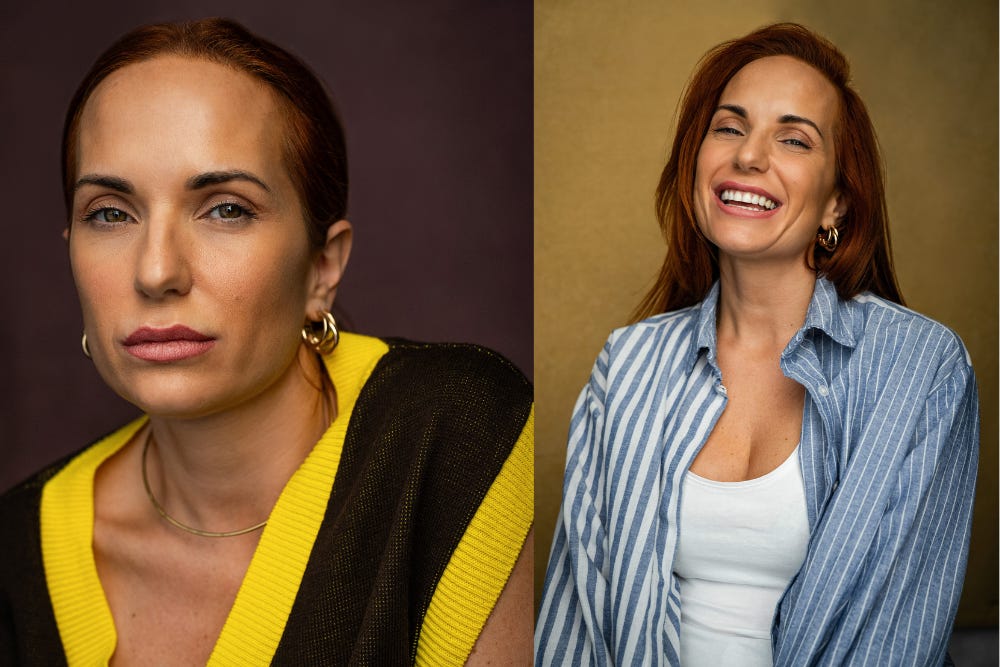
This essay is by Kerry Nicole Davies
I’m dyslexic. I hated school, hated maths, hated tests and being confined to a desk. I hated being asked for the answers to questions. I struggled with reading and writing and I would try to cheat by looking at my neighbour’s work. I hated the pressure of having to get things right and feeling less for not being as smart as my peers.
I remember sitting at the table at school, when I was about seven, and the teacher saying we were spending the afternoon doing art. This didn’t happen often. My eyes started filling with tears. Soon, I was sobbing, uncontrollably, with joy and relief. I wanted to wrap my arms around her in gratitude.
A stack of art supplies had been dropped onto my desk and I was in the zone. I found a blue plastic container that looked like a boat. Without conscious planning, my fingers were moulding tinfoil into a mermaid and I was dipping Plaster of Paris in a bowl of water.
A few years ago, I realised I’d put so much of my light into my family that I’d forgotten about myself.
I didn’t need to be shown what to do, it was instinctive, complete free-flow. My brain was switched off but lit up at the same time: dripping, wrapping, moulding. It was sacred time to express myself, when words failed me.
Secondary school was still hard, but art was more available to me. That’s where I met lots of great teachers who understood my need for a creative outlet.
My form class was in the art department so I was surrounded by supplies and other students’ art work. That inspired me to create. My teacher said I could use whatever I wanted, whenever I wanted. I filled up my coursework books, I got lost for hours just making art.
I remember my first ever drama class. It was movement and I was a bit put out that I had to take my socks off and reveal my feet but I reluctantly did it. The teacher put on different types on music – from drumming to rain sounds, classical and rap. She told us we were artists and we had to paint the room with colours: our body was the brush, she could use it any way we wanted to. Again, I was in flow-state.
I understood the assignment, I felt free.
That teacher asked me to join her after-school drama class and soon, I was on stage in the school’s production of The Crucible. And then The Rocky Horror Show. She found a way for me to love words through expression, through play, through art.
I wasn’t drained, ashamed or worthless: I was an artist and being dyslexic didn’t matter.
Then the teenager years happened. My teachers tried to encourage me to go to art school but I was from a low income background and desperately wanted to learn to drive and buy a car, so I started working and put my dreams of becoming an artist on pause.
When I was 20, I gave birth to my first son. I spent my 20s growing and exploring the world with him. He is also dyslexic, and he’s about to go off to university to study English literature).
I then met my husband and we grew our family of three to six. It’s a heavy workload, with four kids who have different needs. Cooking different meals, cleaning up constantly, snacks, homework, lifts to clubs, school runs. Hospital appointments, tantrums. Maintenance of my own relationship.
A few years ago, I realised I’d put so much of my light into my family that I’d forgotten about myself. I’d forgotten about the things that I love.
Lockdown was my breaking point. I decided to apply for part-time drama school and spend three years training. The spark was reignited. From animal studies – on all fours, mooing as a cow – to a blocked voice chakra, writing plays and embodying Amy Winehouse, raw painful monologues and art books full of character exploration. I was back in the flow state.
Again, it didn’t matter that I was dyslexic, I could feel the words with all my other senses. I was bringing life to the page, paper and stage and – more importantly – to myself.
I just recently booked my first paid role in a short film called Still Life, which will be out soon.
Going to drama school gave me a deeper sense of self. I’ve built the courage and confidence to believe I am worthy of achieving my goals. Dyslexia may bring hurdles, but it does not define who I am or what I’m capable of becoming. My perspective, my voice and my experiences have value.
My message to the next generation is: never give up on your dreams. Follow whatever it is that lights you up. You have something real to share and something meaningful to offer, so follow your passions. Growth isn’t about being perfect or getting things right, it’s about being brave enough to keep going.
Find out more about Kerry Nicole Davies on her Spotlight.

Support us
We Hyperfocus Magazine publishes weekly articles and interviews with neurodivergent creatives - across the arts; across neurotypes.
There are 29 articles up on the magazine already and many more to come.
We are entirely community-supported, and all contributions are really, truly appreciated.
When you pay a small monthly/yearly subscription, it not only feeds back into the magazine and the neurodivergent community, but it also helps this Substack to rise up the ranks - in the ‘education’ category - so that more people see the magazine, learn about neurodivergence and join our mission.
The mission? Change the narrative around neurodivergence by showcasing the creative ways neurodivergent folk navigate life, and the world.
Thank you to all those who are supporting…