


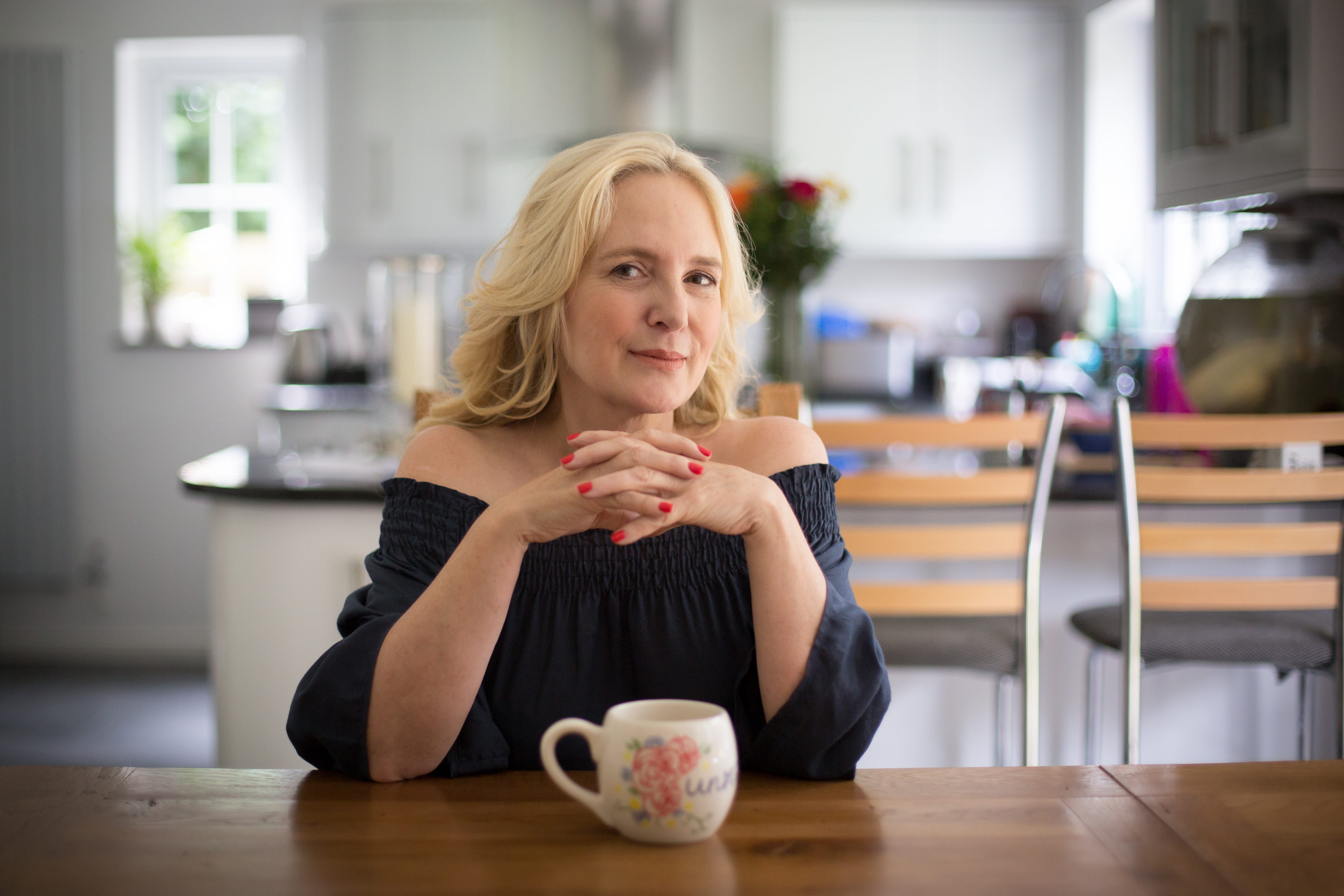
Here, you can listen to Danusia reading her piece, or read it below.
Written by Danusia Malina-Derben
A couple of summers ago, I wrote an essay in which I described myself as highly successful. It didn’t occur to me that this would be controversial.
I wasn’t declaring myself the most successful person or claiming superiority over anyone else. I was simply reflecting on what I have built and survived. The phrase sat quite naturally in the piece.
Then the comments arrived.
Some challenged how I could possibly call myself highly successful. One questioned whether I was really the mother of ten children. A handful appeared to have read an entirely different essay from the one I thought I had written.
Before this starts sounding dramatic, I should confess that this wasn’t a public execution. It wasn’t particularly remarkable by internet standards. The majority of readers were generous and supportive. The critical comments were few.
But they floored me. Not immediately.
That’s the thing. In a crisis, I’m excellent.
Years of raising a large family and working in boardrooms equipped me to navigate complexity. Give me ten competing priorities, a looming deadline and a problem to solve and I tend to become calmer, not less.
What I’ve gradually realised, however, is that my emotional processing works to a completely different timetable.
The comments took minutes to write. I carried them for months.
I rolled them around in my head while cooking dinner. I rehearsed responses in my sleep. I found myself returning to them while driving, walking, working and trying not to think about them. The conversation had closed, yet part of me was still inside it.
This is one of the reasons I am suspicious of advice like “grow a thicker skin”.
What if the issue isn’t thin skin? What if the issue is depth? What if some of us simply process experience differently?
As someone who is neurodivergent, I have spent years trying to understand this about myself.
The challenge has never been knowing who I am, it has been deciding how much of myself to translate.
People often talk about authenticity as though it is a simple choice. Be yourself. Speak your truth. Show up authentically.
Lovely idea.
But authenticity becomes more complicated when you are constantly aware of the distance between what you mean and what other people hear.
Every time I publish something, there is a moment afterwards where I want to flee. This is not because I regret what I’ve written but because I become intensely aware of being perceived.
The piece leaves me and starts living inside other people’s minds. They bring their experiences, assumptions, interpretations and histories to it. They meet a version of me that may bear only a passing resemblance to the person who wrote the words.
I often describe how I feel about this as wanting to run behind a metaphorical sofa.
From the outside, it probably sounds ridiculous. The essay is published. Nothing is actually happening.
Inside my body, however, it can feel like stripped-naked-in-public exposure.
The strange thing is that I know how to minimise this. I know how to write in ways that are more easily received: how to soften opinions before sharing them, how to add context and caveats, how to anticipate objections and reassure people before they have even had them.
In short, I know how to translate.
The problem is that translation is expensive.
The older I get, the less willing I am to spend my creative energy reshaping myself into something more digestible. Relatability has become something of a sacred value online, especially for women.
Be approachable. Vulnerable. Flawed. Tell us more.
There is an assumption that connection requires disclosure and that disclosure should be generous, ongoing and visible.
I don’t agree.
I have written elsewhere about what I call compulsory intimacy and my refusal to participate in it. I cannot force myself to reveal parts of my life simply because culture has decided that disclosure is the price of admission.
Nor am I convinced that relatability is the highest creative virtue.
When I think about the women who have expanded my imagination, they are rarely relatable in the conventional sense.
They are singular, contradictory and contain multitudes. They refuse to collapse themselves into a single identity.
Perhaps I am drawn to them because I have spent my own life resisting reduction.
I am a mother of ten children and an ambitious woman. Neither exists in service of the other.
I am deeply sensitive and remarkably resilient. I love solitude and meaningful connection. I am private and public.
Culture often seems to want us to choose a lane. Mother first. Businesswoman second. Creative but not ambitious. Ambitious but not maternal.
I have no interest in participating in that game.
My life is built on coexistence. What cannot be easily categorised is often perceived as less relatable.
For years, I thought this meant I was getting it wrong.
Now I think it simply means I am unwilling to abandon parts of myself in order to make other people comfortable.
That doesn’t mean it never hurts. It does.
The choice has never been between comfort and discomfort.
The choice has been between internal dissonance and external rejection.
I can try to become more acceptable, easily understood. I can translate endlessly until all the rough edges disappear.
Or I can allow some people to misunderstand me.
Increasingly, I choose the latter.
Not because rejection doesn’t sting, but because I have finally realised that self-abandonment has a cost too.
Kristy Forbes writes that freedom is “being able to choose without being coerced by expectation, shame, fear, urgency, politeness, performance, or the need to be seen as good…If only I could tell you how much of my life has been chewed up and spat out by the exhausting process of performing goodness.”
Exactly.
For much of my life, I thought belonging depended on performance. Now I’m more interested in freedom. Part of that freedom has involved developing something that feels like compersion: genuine happiness for people who are more easily received than I am.
People whose communication style fits neatly within cultural expectations, whose warmth translates effortlessly and who seem to move through the world without friction. I no longer see their success as a judgement on mine.
Their path is theirs. Mine is mine.
And while I may never be the most relatable person, I have become increasingly committed to being the most truthful one. At least to myself.
That feels like a trade worth making.

